Menu: Home | Tours | Art Show | Events | Shippen Manor | Shippen Manor News | Art Grants | History | Directions / Contact
The Shippen Family
The Shippens were a powerful and affluent Philadelphia Quaker family that played an integral role in both colonial and industrial history of colonial America.
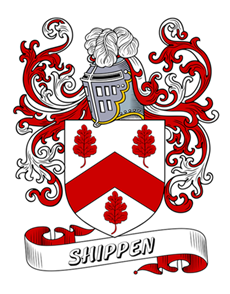
The patriarch of the family was Edward Shippen, Sr. (1639-1712), who became the first elected mayor of Philadelphia and also served as a member of the Provincial Congress. He married three separate times– Elizabeth Lybrand (m. 1671-1688), Rebecca Richardson (m. 1689-1705) and Esther Wilcox (1706-1724). In total, he had twelve children that included Joseph, Sr. (1678/79-1741).
Philadelphia merchant, Joseph Shippen, Sr. (28 Feb 1678/79 in Boston, MA to 28 July 1741 in Germantown, PA) married Abigail Grosse (25 Oct 1677 in Boston, MA to 28 June 1717 in Philadelphia, daughter of Thomas & Elizabeth Grosse) in 1702 and they had eight children including Joseph II (1706-1793) and Dr. William I (1712-1801). He was the son of Edward Shippen and Elizabeth Lybrand Shippen. Sometime prior to 1741, Joseph I purchased a large tract of land in Oxford from William Coxe (son of Proprietor Dr. Daniel Coxe). He was an absentee owner, having retired early from his successful mercantile business in Philadelphia and moved to a plantation in Germantown, PA. He leased his landholdings to Jonathan Robeson who was probably an acquaintance from a distinguished Philadelphia family who was living in neighboring White Marsh. He and Abigail had at least eight children, including Dr. William Shippen, Sr. (1712-1801) and Judge Edward Shippen II (1703-1781).
Dr. William Shippen, Sr. (1 Oct 1712-4 Nov 1801) was a self-trained physician who was elected to the Continental Congress in 1778 and re-elected in 1779. He was also a member of Benjamin Franklin’s “Junto” and elected vice-president of the American Philosophical Society. In addition, he was a physician to the Pennsylvania Hospital (1753-78) and one of the founders of the University of Pennsylvania and the College of New Jersey (Princeton). William Coxe, son of Proprietor Colonel Daniel Coxe, and entered into a partnership with his brother, Joseph Jr., and Jonathan Robeson. In the 1750s and 1760s, William I continued improvements at the Furnace and was more of a gentleman landowner than an iron magnate and much of his land was rented out to tenant farmers. He and his wife, Susannah Harrison, had five children that included Dr. William Shippen, Jr. (1736-1808) and Joseph William Shippen (1737-1795).
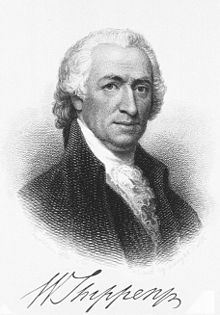
In July 1776, Dr. William Shippen, Jr. became the chief surgeon of the Flying Camp in New Jersey during the American Revolution. By that October, he was appointed as head of all hospitals west of the Hudson River. He married Alice Lee (1736-1817), daughter of Colonel Thomas Lee of Virginia in 1762 and had eight children. He did take active interest in the furnace and visited it several times as well as sent provisions from Philadelphia for the workers. Shippen died suddenly of anthrax on 11 July 1808 in Germantown, Pennsylvania. During the American Revolution, Dr. Shippen was known to have corresponded several times with General Washington pertaining to the inoculation of the Continental Army against small pox. He never lived at the Manor, even when he becomes part-owner after his father’s death and will reside in the Shippen House on 4th and Locust in the “Old City” of Philadelphia with his wife and family.
Children:
1. Anne Hume “Nancy” Shippen (1763-1841), m. Col. Henry Beakman Livingston (1750-1831) in 1781, one daughter
a. Margaret “Peggy” Beekman Livingston (1781-1864), unmarried, no children
2. Thomas Lee Shippen (1765-1798), m. Elizabeth Carter Farley Izard (1772-1826) in 1791; at least 2 children
a. Dr. William Shippen (1792-1867), m. Mary Louise Shore (1798-1879), at least 11 children
b. Thomas Lee Shippen, Jr. (1793-1810), unmarried, no children
Joseph William Shippen (1737-1795) a modestly successful man in his own right. During the American Revolution, he served as a civilian paymaster in Bethlehem (PA) and Lititz Flying Army Hospital, serving the same time as his brother, Dr. William Shippen. He settled on his father’s estate at Oxford Furnace in the early 1760s and was made manager for thirty years until his death in 1795 at age fifty-eight. During that time, he and Martha Axford (d.c. 1798/1801), who was hired by his father to be “housekeeper” at the Manor, cohabited and had seven children out of wedlock (some genealogical resources referred to them as married, but no documentation exists at this time to prove that, but may have been “Quaker married” or common-law married). Joseph W. incurred the ire of his father due to his intimate relationship with Martha (who was daughter of early Oxford area pioneer, John Axford).. Joseph William died intestate (without a will) and his father came to the Manor to “administer his son’s estate and oversee furnace operations.” He also leased the furnace to Jacob Starn (“Shippen and Starn’s furnace”). Although he disapproved of his son and Martha’s relationship, he provided for all of his grandchildren in his will and an “allowance” of sorts for Martha.
(Note: Martha’s father, John Charles Axford, was wealthy in his own right. It is not entirely probably was the she was a “traditional” housekeeper, but perhaps “keeper of the house”. This is still just a theory and has not been proven.)
According to William Clinton Armstrong’s book, The Axfords of Oxford, New Jersey, a genealogy beginning in 1725 (Morrison, IL: Shawver Publishing Co., 1931), Joseph William Shippen and Martha Axford had seven children who were all born at Oxford Furnace, NJ (pages 69-70). (Also see the NJGSBC.org page for more genealogical information. Please bear in mind that at times there are inconsistencies, hence “c.” before dates.)
- William J. Shippen (c. 1765/68, Oxford Furnace to 1848, Hartland, NY), married Margaret Taylor (1781-1855), at least 8 children
a. Clarissa Shippen (1795-1887), m. Luther Mather (b. 1795), one child
b. Jacob Shippen (1800-1839), m. possibly unmarried, no children
c. Joseph Shippen (1802-1875), possibly unmarried, no children
d. John Shippen (1806-1880), m. Caroline ____ (b. 1818), three children
e. Henry Shippen (1809-1838), m. Eliza Esther Morrison (1820-1894), at least 1 child
f. Jeromas Shippen (1806-1880), m. Sarah ___ (1825-1910), at least 5 children
g. Mary Shippen (c. 1812- c.1880)
h. Susan Shippen (1815-1843) - Joseph Shippen (d. 14 Oct 1811), unmarried.
- John Beach Shippen (1774 to 22 Feb 1824, Hamburg, NJ), m. Mary DeCamp (b. 1788) in 1809, at least 3 children; he died on a business trip in Hamburg, Sussex Co., NJ.
a. Samuel Shippen Carpenter (1809-1878), m. Emily Ayres (1810-1860), at least 6 children
b. Lucretia Shippen (1810-1899), Josiah Courter (1803-1877) in 1829, at least 10 children
c. Benjamin DeCamp Shippen (1815-1896), m. Sarah Elizabeth Meade (1820-1891) in 1835, at least 7 children - Ann Shippen (c. 1776 to c. 1854), married John (Hancock) McMurtrie (1776 to 1851) on 15 September 1803, six children.
a. William McMurtrie (b. 1804)
b. Nancy McMurtrie (1807-1887), m. Joseph Springer (1796-1861), at least 10 children
c. John McMurtrie (1809-1888), m. Elizabeth Connell (b. 1814) in 1841, at least 5 children
d. Emeline McMurtrie (b. 1812), m. Alexander Kennedy (1811-1845) in 1833, at least 7 children
e. Angeline McMurtre (b. 1818)
f. Horace McMurtrie (1820-1865), m. Margaret ____ (1826-1852), at least three children - Maria Shippen(1778-1856), m. Samuel Blair (1770-1805) in 1803, at least 1 child. Samuel Blair was the son of John Blair and uncle of John Insley Blair.
- Susan Shippen (1784 to 16 April 1856), m. Isaac Crisman and lived near Blairstown, at least 7 children.
a. Charles L. Crisman (1806-1879), m. Sally Ann Hawk (1812-1898) in 1834; at least 8 children.
b. Oscar Crisman (1807-1861), m. Elizabeth McMurtrie (1828-1886) in 1850; at least 1 child.
c. William H. Crisman (b. 1809), m. Elizabeth Bowlsby (n.d.)
d. Nelson Crisman (1810-1881), m. Charlotte Matilda Wildrick (1815-1891) in 1838; at least 7 children.
e. Angeline Crisman (1811-1886), m. Samson G. Howell (1810-1879) in 1834; at least 9 children.
f. Morris Crisman (1815-1897), m. Elizabeth A. Howell (1821-1921) in 1843; at least 9 children.
g. Edgar Crisman (1819-1909) - Abigail Shippen (1786 to 10 Oct 1868, Easton, PA), m. James Robert McTeir (b. 1796) in 1807.
Benedict Arnold & Peggy Shippen
Visitors have asked about Mrs. Margaret “Peggy” Shippen Arnold (1760-1804), wife of Benedict Arnold V (1741-1801), the disgraced, traitorous former American General of the American Revolution. She was the great-niece of Dr. William Shippen, Sr. (brother Edward, was her grandfather). We do not have any information in our records to show that the Arnolds visited or stayed at the Manor or elsewhere in Oxford.
Jonathan Robeson, Iron Master
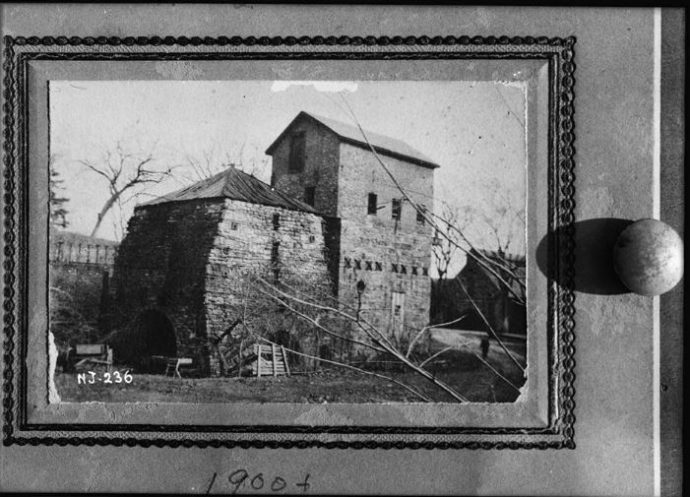
Historic American Buildings Survey, 1930s.
Jonathan Robeson (1690-1766/67), of Philadelphia, began to erect a furnace at Oxford in 1741 due to the accessibility of ore in the area. The first pig iron was turned out on 9 March 1743, and weekly production ranged from 13 to 15 tons. Initially, Robeson entered into a partnership with Joseph Shippen, Sr., and upon his death, Robeson agreed with Joseph Shippen, Jr. to share the furnace’s profits equally. He continued to buy land around Oxford through the 1740s, hoping to eventually acquire the furnace from Joseph, Jr., who was more of a playboy than a landowner. Between 1743 and 1751, Robeson purchased tracts of land in and around Oxford that would eventually amount to more than 3000 acres of land. The individual tracts, enumerated in a series of Sussex County deeds, date between 1749 and 1762 including his 1745 purchase of one-half interest in the 578-acre “furnace tract” from Joseph Shippen, Jr. This allowed for Robeson to have partial ownership of the land on which he would build his furnace and for which he had been playing rent to the Shippen family for about four years.
For the first few years, Robeson was considered the ironmaster and proprietor. The exact business agreement between Robeson and Joseph, Jr. is not known, but after 1745, the men were considered co-owners of the furnace tract and most likely the iron business as well. Neither lived in Oxford full-time. Robeson had practical expertise in the iron business and spent more time in Oxford than his partner as his principle residence was in Whitemarsh, PA, where he was a judge in Philadelphia County. In addition, Robeson also owned a home in Kingwood (Hunterdon County), New Jersey. Due to his commitments as just, Jonathan employed his son, Maurice (1724-61), along with Richard Shackleton, to manage the furnace and attend to the day-to-day business affairs.
In 1749, Robeson sold part of his interest to Dr. William Shippen, Jr. in order to obtain capital for a new force being built in Changewater, along the Musconetcong River. The Changewater Forge was not producing as much as the one in Oxford, and along with a disagreement with the Shippen Brothers (Joseph and William) over the building of the manor in 1754, Robeson sought to leave the partnership. Joseph and William Shippen bought the bulk of Robeson’s Oxford properties, including all of his interest in the furnace in 1757. The consideration consisted of two payments of £350 in cash or pig iron, as well as the right to purchase 100 tons of pig iron for the Changewater forge at £6 per ton annually for three years. It was also believed that as a Quaker, Robeson, could not participate in the manufacture of ordinance to supply the British and Colonial troops during the French and Indian War. Five years later (1762), Robeson sold the remainder of his interest in the Oxford properties to Dr. William Shippen, II.
Known Genealogy of Jonathan/Johnathan Robeson (1695-1766/67), original builder and original iron master at Oxford Furnace
Robeson, Susan Stroud and Caroline Franciscus Stroud, An Historical & Genealogical Account of Andrew Robeson of Scotland (1653-1916). Philadelphia: J.B. Lippincott Co., 1916. (Link for free e-book)
Andrew Robeson, Sr.
b. 1630 in Scotland
d. 1694, Philadelphia, PA (buried in “Friends’ Burying Ground” where he was listed as “not a Friend” or not a Quaker)
Migrated to West Jersey around 1676; moved to Philadelphia Co., Pennsylvania where he purchased “Shoomac Park“.
Married (after arrival in West Jersey): Elizabeth ___ (d. Sept 1695, Philadelphia, PA; buried 30 Sept 1695 in Friends Arch Street Meeting House burial ground– not as a Quaker, recorded as “such as are not friends.”).
Children:
1. Samuel Robeson (d. before 23 Sept 1699, Philadelphia, PA)
2. Andrew Robeson, Jr. (1654, Kelso, Roxburghshire, Scotland to 19 Feb 1720, Douglassville, Berks Co., PA), their nephew (adopted?)
Andrew “Andreas” Robeson, Jr.
b. 1654, Scotland
d. 19 Feb 1720, Douglassville, Berks Co., PA
Buried at St. Gabriels Episcopal Church Cemetery, Douglassville, Berks, Co. PA
* Robeson settled in Gloucester Co., West Jersey, where he lived until 1702 when he moved to Philadelphia, PA.
Married: Mary Spencer Helm Robeson (1666, Delaware Co., PA to c. 12 Nov 1716, Bucks Co., PA), buried in Gloria Dei Church Burial Ground, Philadelphia, PA
Children:
- Andrew Robeson, 3rd (bc. 1696 to 1750), married Magdalen Rudman
- Israel Robeson (bc. 1688 to 1774), married (unknown)
- Jonathan Robeson (bc. 1690 to 1766), married Elizabeth Morris
- Magdalen Robeson Potts (bc. 1693 to 1764), married Thomas Potts
- David Robeson (bc. 1697 to 1764), married Elinor Lane
- Thomas Robeson (bc. 1698 to 1773), married Sarah Singletary
- Samuel Robeson (bc. 1699), married Hannah Lane
- Elinor Robeson Leech (bc. 1703), married Captain Jacob Leech
- Mary Robeson Hulings (bc. 1705 to 1736), married Michael Hulings
- Peter Robeson (bc. 1707 to 1742), married Sarah Farmer
- Margaret Robeson Yorke (bc. 1710 to 1742), married Thomas Yorke
*There are no definite dates of any of the children of Andrew Robeson, Jr. and their ages, according to An Historical and Genealogical Account of Andrew Robeson, page 15.
Jonathan Robeson
bc. 1690, Gloucester Co., West Jersey
d. before April 1766, Upper Dublin PA
Married Elizabeth Philippine Morris Robeson (22 Feb 1695), daughter of David Morris of Pa.
Children:
- Robert Robeson (b. 1722), unmarried
- Maurice Robeson (1724 to Nov 1761), married Anne Rockhill
- Jonathan Robeson, Jr. (1726 to 1783), married Catherine Farmer
- Mary Robeson (b. 1728), unmarried
- Rachel Robeson Rockhill (1729 to 27 Jan 1773), married Dr. John Rockhill
- John Robeson (1731 to c. 1799)
- Elizabeth Robeson Robeson (1735 to before 1766), married Edward Robeson
According to An Historical and Genealogical Account of Andrew Robeson… (pages 31-32), “Jonathan Robeson was born in Gloucester Co. New Jersey, but his early manhood was spent in Phila. Co. Pa. at the homestead ‘Shoomac Park:’ he probably went with his father and the family to the Manatawny region in 1718, and engaged in the iron business, as his interests were always in the iron industry, and his investments throughout his life were in furnaces and forges which he worked extensively.”
Jonathan and Elizabeth lived in the Manatawny region of PA and later spoke of Whitemarsh and Wrightstown, PA. Afterwards, he moved to West Jersey and is known to have lived in Kingwood (Hunterdon Co.). He served in several capacities such as a member of the Colonial Assembly of PA (1730-1738) and member of the Court of Common Pleas (1738). Even though Jonathan never moved to the Oxford area, he retained his residence in Pennsylvania for a time as well as his Kingwood residence. In 1760, he advertised his Kingwood properties for sale, where they transferred from Kingwood Meeting (Hunterdon Co., NJ) to Greenwich, NJ, to live near his son, Maurice. Both locations were Quaker-related establishments.
Jonathan began to construct the Furnace in Oxford around 1741 and the first pig-iron was turned out on 9 March 1743. The weekly product was 13 to 15 tons (as compared to the output by Empire Steel & Iron Co. in 1906, which was about 700 tons) (Robeson and Stroud, 33). The Robeson Furnace was the only blast furnace in Warren County (at the time, this was Sussex Co.) for over a hundred years. It was still in good condition during the 19th c., with the last date of its use as 1881 where it was blasted out and made inoperable. Even today, the remaining parts of the Furnace stand tall and a monument to the industrial past of Oxford, NJ. As a result of the construction of the Furnace, the town of Oxford was formed around 1753 (33).
Around 1756, Jonathan sold all of his interest in the Oxford Furnace, along with stock and land, to Dr. William Shippen, Sr. The homestead was sometimes called the “Robeson” or “Scranton” house, and later the “Fowler” (boarding) house. The structure was built by Dr. Shippen soon after purchasing the Furnace from Robeson (see “The Manor” below).
Maurice Robeson
(Son of Jonathan Robeson and Elizabeth Philippine Morris)
b. 1724, Upper Dublin, PA
d. Nov. 1761, Green Pond, Warren Co., NJ
Married Anne Rockhill (d. 26 Feb 1774) on 25 April 1750. She was the daughter of Anne Clayton Rockhill and Edward Rockhill of NJ. (Robeson & Stroud, 51).
Children:
- Elizabeth Robeson (15 June 1751 to 2 April 1833), unmarried
- Mary Robeson (1 Feb 1753 to before 1781), unmarried
- John Robeson (22 Jan 1755 to 5 May 1835), married Martha Boyle
- Achsah Robeson (21 March 1757 to before 1781), unmarried
- (David) Morris Robeson (19 May 1759 to 31 Jan 1823), married Tacy Paul
- Anne Robeson (14 Feb 1762 to before 1781), unmarried
Maurice worked with his father, Jonathan, in the construction of the Furnace in Oxford, NJ. After he married Anne Rockhill Robeson, they settled at the lower end of Green Pond Greenwich Twp., near Oxford Furnace (51-52). He was the Sheriff of Sussex (Warren) County, NJ in 1754. The next year, he purchased land in Orange Co., NY and moved his family there. He build one of the first furnaces in that region along Dean Creek, five miles west of Fort Montgomery (52).
Due to ill health, Maurice and family moved back to his old home in NJ in 1761 and died soon after. He was buried in the Friends Burying Ground in Quakertown, Hunterdon Co., NJ. He was about 37 years of age upon his death and left behind a widow and six children (the oldest was age ten). Maurice owned three valuable tracts of land: 1. two miles from Oxford Furnace, NJ (300 acres), 2. five miles from the first tract (250 acres), and 3. a tract of about 200 acres on the north side of the “Paulins-kiln River” at a place known as “White Rocks” (52).
(David) Morris Robeson
(Son of Maurice Robeson and Anne Rockhill)
b. 19 May 1759, Forest of Deane, NY
d. 31 Jan 1823, Oxford Furnace, NJ (near Green Pond)
He married Tacy Paul (1769-1849) and they had at least 10 children.
- Judge William Penn Robeson (1789-1864)
- John Paul Robeson (1793-1836)
- Elizabeth Robeson (1795-1865)
- Charles Shoemaker Robeson (1796-1836)
- Mary Paul Robeson (1800-1865)
- Ann Rockhill Robeson (1803-1803)
- Morris D. Robeson (1804-1856)
- Joseph Paul Robeson (1806-1807)
- Tacy Ann Robeson (1808-1871)
- Joseph Paul Robeson (1810-1865)
Morris died in 1823, leaving his wife, Tacy, the Executrix of the “Oxford plantation.” While they were alive, Morris and Tacy lived off of the profits of the mines and farms, but not the Furnace (it was not running during their time in Oxford). When the State created an act to separate Warren from Sussex County, Tacy published letters in the 1825 Belvidere Apollo, petitioning for Oxford to be the new county seat (offering land and money), but instead Belvidere was chosen.
Judge William Penn Robeson
(Son of David Morris and Tacy)
b. 10 Nov 1789, Philadelphia, PA
d. 2 Dec 1864, Belvidere, NJ
Buried in the Belvidere Cemetery, Belvidere, Warren Co., NJ
He married Anna Maria Maxwell (1806-1886), the daughter of Hon. George C. Maxwell (1774), who was an attorney and a member of Congress. In addition, she was the great-niece of General William (“Scotch Willie”) Maxwell and granddaughter of Captain John Andrew Maxwell II (1739-1828), American Revolution.
He and Anna had at least five children:
- Mary Robeson (1827-1844)
- George Maxwell Robeson (1829-1897), served in the Civil War and as Secretary of the Navy under President U.S. Grant.
- Anna M. Robeson (1831-1911)
- Emily Maxwell Robeson (1833-1915)
- William Penn Robeson, Jr. (1837-1881), served in the Civil War
William Penn Robeson served for 25-years as presiding Judge of the Court of Common Pleas in Philadelphia, PA, the fifth judge in the Robeson line. For several years after his marriage, he resided at Oxford Furnace and was the postmaster for a time. He and his brother-in-law, Jonathan P.B. Maxwell, were in charge of the furnace and stores (but the furnace had been out of blast following the Shippen years). In 1831, the furnace was leased to “Henry, Jordan and Company”. The Judge then settled in Belvidere, NJ and remained there for the rest of his life. He was a promoter of the improvement and welfare of Belvidere and its residents. In 1847, he was candidate for the Governor of New Jersey. In addition, Judge Robeson was a large landowner. It was recorded that he was genial, hospitable, widely known and respected.
He is buried alongside his wife and some of his children at the Belvidere Cemetery, Belvidere, Warren Co., NJ.

George Maxwell Robeson
(Son of Judge William Penn Robeson and grandson of (David) Morris Robeson and Tacy Paul )
b. 20 Oct 1854, Belvidere, NJ
d. 27 September 1897, Camden, NJ
Buried in Belvidere Cemetery, Belvidere, NJ
Married (1) Anna M. McConnell on 27 June 1876. She was the daughter of Lydia Ring McConnell and John McConnell of Richmond, VA.

They lived in the Maxwell-Robeson-Cummins House
(202 Mansfield Street, Belvidere, NJ), which currently used by the Warren County Board of Elections.
Children:
- Rev. John M. Robeson (b. 30 June 1877), married E. Meredith
- Ellen Maison Robeson (19 Dec 1878 to 7 July 1880)
- George Chapin Robeson (4 Jan 1882 to 20 March 1912)
- Frank Leigh Robeson (b. 24 June 1884), m. M. A. Matthews
Married (2) Mary Isabel Ogston (1940-1910) on 23 January 1872.
Child:
1. Ethel Maxwell Robeson (1872-1965), m. William Sterling (1872-1937) in 1910; no children
G.M. Robeson was a notable member of the Robeson Family. He was related to both Gen. William “Scotch Willie” Maxwell (1733 to 4 Nov 1796, buried in Greenwich Presbyterian Church Cemetery, Warren Co., NJ) of American Revolution (through marriage) and Jonathan Robeson, the builder and first iron master of Oxford Furnace. George M. Robeson graduated from Princeton College (now University) in 1847, was admitted to the bar in 1850, and practiced law in both Newark and Camden, NJ. In 1858, Robeson was appointed as prosecuting attorney for Camden Co., NJ. He actively organized State troops for service during the Civil War and was commissioned brigadier general by Governor Parker. In 1867, he was elected attorney general of NJ and served until he resigned on 22 June 1869. From 25 June 1869 to 12 March 1877, he was appointed as Secretary of the Navy in the cabinet of Pres. U.S. Grant. Following this appointment, he resumed his law practices in Camden, NJ. From 4 March 1870 to 3 March 1883, he was elected as a Republican to the 46th and 47th Congresses as well as chairman on the Committee on Expenditures in the Department of the Navy during the 47th Congress. After Robeson ran an unsuccessful bit for reelection in 1882 to the 48th Congress, he resumed his law practice in Trenton, NJ where he died on 27 Sept 1897. He was buried in the Belvidere Cemetery with his family (US House of Reps).
HENRY FAMILY
In 1823, (David) Morris Robeson (1759-1823), grandson of Jonathan Robeson and son of Maurice (1724-1761), died. His son, Justice William Penn Robeson (1798-1864) and brother-in-law, John P.B. Maxwell (1804-1845) leased the Furnace to “Henry & Jordan” (William Henry (1794-1878) and his brother-in-law John Jordan (1770-1845) on 1 May 1832. The lease was for the Furnace ($1000), mill ($200), Manor and 12 houses ($100) per year.
- His widow, Tacy Paul (1769-1849), is the Executrix of Morris’ will and lives in the Manor in Oxford. In 1824-25, she offered a couple of acres of land and money for the County seat to be established in Oxford. Through a series of votes throughout the County and the donation of land by Garrett D. Wall, Belvidere eventually became the County seat in the newly formed County of Warren.
In 1832, the Morris Canal opens.
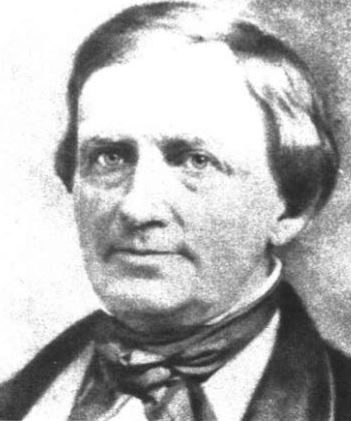
The same year, William Henry (1794-1878, portrait on left) who previously established the Henry Rifle Manufacturing Co. in Nazareth, PA (currently in Jacobsburg State Park) with his brother, John Joseph Henry (1786-1836), sold his shares to his brother and assumed control over the Oxford Furnace. The Henry brothers manufactured rifles under a government contract for Maryland and Delaware during the War of 1812.
William Henry will rebuild the stack, bridge, casting house and other components of the Furnace, in addition to the coal barns and 6 workingmen’s houses. He erected a new “blowing machinery” or tubs. The Furnace went into blast on 4 Aug 1832 and produced 17-20 tons per week. Shortly thereafter, John Frederick Wolle (1785-1860), Henry’s brother-in-law (married to sister, Sabina Henry (1792-1859), joins the firm and it is renamed “Henry, Jordan & Co.”
From 1833 to 1837, William Henry lives at the Manor. His youngest son (of about 5 children) from his first marriage to Mary Barbara Albright was, Joseph J. Henry (1834-1862) was born at the Manor. After his first wife’s death, he will marry his second wife, Sarah Atherton and they will have three children.
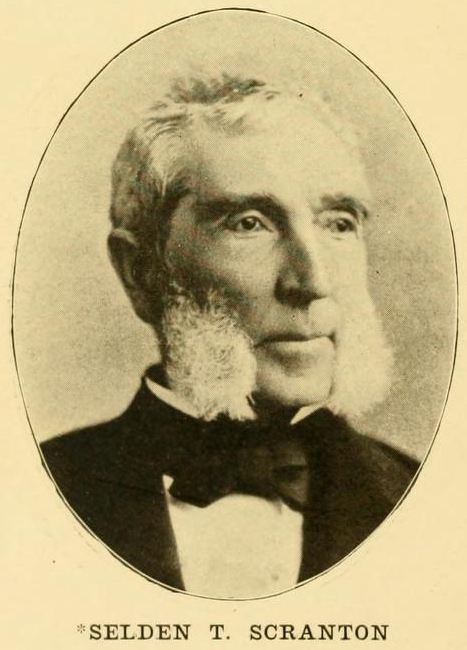 In 1834, Henry hires Selden T. Scranton (1814-1891, portrait on left) at the Furnace. In 1834-35, Henry successfully uses hot blast for the first time in US history at the Oxford works, heated to tymp on May 24th. He reduced the stack from 33-1/3′ to 31-1/3′ in height.
In 1837, Henry leaves Oxford under the management of Selden and George Scranton (brothers from Connecticut, then Belvidere) while he returns to run the Analomink Forge in PA due to John Jordan’s illness.
By 1840, the Henry, Jordan & Co. has been dissolved. The Analomink Forge is sold to Jordan (John Jordan’s son?) and the lease on the Oxford works and equipment is sold to George S. and Selden T. Scranton on Feb 15. Henry moves to Slocum’s Hollow and founded the town of Harrison (later, Scranton), PA. He built a furnace there, which is ready by Aug. 1841 and financed by the Scrantons, Grant & Mattes.
William Henry will die on 22 May 1878.
HENRY-SCRANTON FAMILY
The Scranton era overlaps with the Henry era as they were related through marriage. Members of both families were affiliated with the furnace workings for many years after the death of the last Scranton brother, Selden, in 1891.
Selden Theophilus Scranton (1786-1891) and his brother, George Whitfield Scranton (1811-1861, picture to left) were the first two brothers affiliated with the Furnace. They were hired by William Henry to manage the furnace and works while he returned to Pennsylvania in 1837.
In 1839, Selden married William Henry’s eldest daughter, Ellen Clarissa Henry (1821-1897) and they lived in Oxford.
Selden was the founder of the Lackawanna Iron & Steel Co. (named for the Lackawanna River, PA and ran from 1840-1922). He was in a partnership with Sanford Grant and Philip H. Mattes, who were founders of Scranton (naming it for the Scranton family).
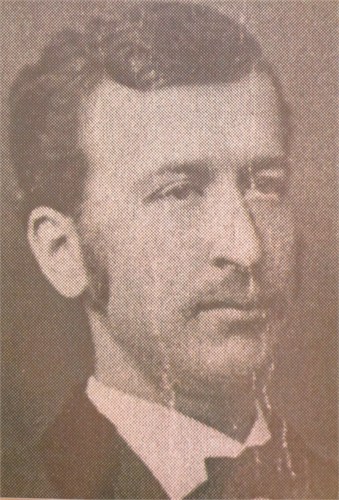
In 1841, Selden & George Scranton, along with William Henry, put the Harrison (Scranton) furnace into blast, but it keeps going out. They argue over the size of the water wheel, and as a result, Henry quits. Charles B. Scranton (1822-1888, portrait on left), the third Scranton brother, manages the Oxford Furnace and lives at the Manor while his brothers are in Harrison, PA.
- George constructed the Northumberland division of the Lackawanna Railroad and also helped to create the Delaware, Lackawanna, & Western Railroad. He served as president of the two companies.
Selden returns to Oxford Furnace, NJ in 1858.
When the Civil War breaks out in 1861, William Henry, Jr. (1830-1889) enlisted in the 1st NJ Volunteers. he was originally commissioned 1st Lieutenant on 31 May 1861 and promoted several times, finally mustering out as a Lt. Colonel on 23 June 1864. He will serve in all major battles, including Gettysburg (as a part of the 1st NJ Battallion). Later, he will die in Texas, but his remains will be transported back and interred in the Belvidere Cemetery with other Henry-Scranton family members.
Charles Scranton, their brother-in-law, is the aide-de-camp of Governor Olden and is the Disbursing Officer & Quartermaster of Camp Fair Oakes, in Flemington (the former fair grounds that was redeveloped several years ago). He was born in Madison, CT and raised in Oxford.
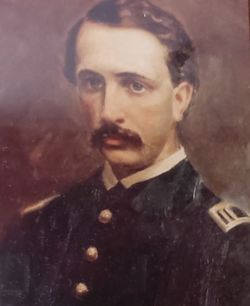 Joseph J. Henry (1834-1862, portrait on left), the younger brother of William, enlisted in the 9th NJ as the Captain & commander of Company H on 11 Nov 1861. He was killed in action during the assault on Roanoke Island (NC) on 8 Feb 1862 and was the first NJ officer to die in combat during the Civil War. His remains were returned and interred in the Belvidere Cemetery with other Henry-Scranton family members.
In 1855, the Warren Railroad was constructed and traversed Oxford and rights were obtained to build a tunnel through the Van Nest Gap. This was not completed until about 1861.
George W. Scranton, was elected to Congress from PA as a Republican in 1858 to the 36th Congress. He served from 4 March 1859 until his death on 24 March 1861.
Selden will build his house in Oxford (currently a private property), “Chestnut Grove”, located north of the Manor, and founded “S.T. Scranton & Co.” as a real estate holding company for the acquisition of mining properties. The 2nd Presbyterian, on Washington Ave. in Oxford, was constructed on land donated by the Scrantons in 1863.
From 1863 to 1865, the rolling mills on the east side of town were constructed under the leadership of Eugene Henry (1826-1883), one of William Henry’s other sons. Two years later, the Oxford works experienced a “boom time” with the price of pig iron increasing to $90 a ton. In the “wheelwright” building across the street from the Furnace was making railroad car wheels around the same time.
Furnace #2, which no longer stands, was constructed in 1871 in response to this boom. It was 18 feet in diameter and 63 feet tall. According to the Dickey Report (1970), the three Scranton brothers build this furnace, but it was not initially successful. By the time of the Panic of 1873, the price of pig iron dropped to $25 per ton. As a result, Furnace #2 was not as successful during this time.
The Scrantons are also involved with the Delaware, Lehigh & Western/Lackawanna Rail Road and are associated with Robert McAllister (1813-1891), former Brigadier General of the 11th NJ during the Civil War and also affiliated with the iron works and railroad in the Oxford area.
On the 1880 US Census, William Henry Scranton (1840-1889), the son of George W. Scranton, was listed as “General Manager of Oxford Iron Co.”
By 1884, Furnace #1 (original) was blasted out for the final time. It was outdated and various fissures and cracks in the bosch made it dangerous to operate.
Charles Scranton dies as a result of falling off the back of the train that was traveling from Washington to Oxford on 10 March 1888.
By 1889, both William Henry, Jr. and William Henry Scranton have died. Selden is the last remaining Scranton brother and knows that he is near broke. He decided to throw a lavish 50th wedding anniversary party for he and his wife, Ellen. He hired a band, six Presbyterian ministers, a chistening of his namesake with prayers and blessings.
Two years later, one 23 November 1891, Selden T. Scranton has died. Four years later (1895), the Oxford Iron & Nail Co. goes into receivership and Furnace #2 is blown out (made inoperable).
In 1899, the Empire Steel & Iron Co. was incorpirated in NJ on 14 March and merged smaller iron furnaces (including the Oxford Furnace #2) left behind by the creation of large integrated steel companies. The next year, the rolling mill was dismantled and sent to Columbia, PA where it was reassembled.
Although some Scranton-Henry family members are still involved in the iron works after the brothers passed, they will no longer be affiliated once Empire Steel & Iron takes over the works in Oxford.
HENRY-SCRANTON GENEALOGY
William Henry III (1794-1878) m. (1) Mary Barbara Albright (1799-1842)
Children:
1. Reuben Albright Henry (1818-1910), m. Esther Perkins (1831-1930), 2 children
2. Ellen Clarissa Henry (1821-1897), m. Selden T. Scranton (1814-1891), no children
3. Jane Ann Henry (1823-1909), m. Col. Charles Scranton (1822-1888), 7 children
a. Mary Elizabeth Scranton (1849-1925), m. Edmund Taylor Lukens (1848-1940) in 1878; 2 children
b. Ellen Henry Scranton (1851-1932), m. Rev. William Henry Belden (1841-1896), at least 1 child
c. George Scranton (1853-1854), died in infancy
d. Lucy Scranton (1855-1903), died unmaried, no children
e. Jane “Jenny” Henry Scranton (1857-1918), married Addison John Roe (1834-1909) in 1886; at least 3 children (possible 2nd marriage)
f. Caroline Scranton (1859-1929), m. George Scranton Humphrey (1856-1910) in 1883; at least 2 children
g. Charles Scranton (1864-1868), died in youth
h. Joseph Henry Scranton (1866-1947), m. Clare Wallace Ellis (1867-1930) in 1893; 2 children
4. Eugene Thomas Henry (1826-1882), m. Emma Elizabeth Walter (1842-1928), 6 children
a. William Henry (1862-1904), unmarried, no children
b. Philip Walter Henry (1864-1947), m. Alice Clover Cox (1874-1946) in 1906; at least 1 child
c. Ellen Clarissa Henry (1868-1889), unmarried, no children
d. George Scranton Henry (1870-1904), unmarried, no children
e. Joseph Albright Henry (1872-1904), unmarried, no children
f. Eugenia May Henry (1880-1965), unmarried, no children
5. Col. William Henry (1830-1889), unmaried, no children
6. Capt. Joseph J. Henry (1834-1862), died during assault on Roanoke Island, NC during the Civil War; unmarried, no children
William Henry III (1794-1878) m. (2) Sarah Perkins Atherton (1814-1895), 2 children with Henry
Children:
1. Lydian Atherton Henry (1849-1911), m. Rev. Winfield Scott Stites (1847-1895), 3 children
2. Thomas Atherton Henry, Sr. (1853-1923), changed name to Thomas Henry Atherton in 1871, m. Anna Parke (1857-1916), 6 children
a. Louise Parke Atherton (1881-1859), m. Rev. Samuel Dickey (1872-1944), in 1908; 4 children
b. Brig. Gen. Thomas Henry Altherton, Jr. (1884-1978), m. Mary Kidd Mish (1900-1988) in 1921; at least 3 children
c. Melanie Gildersleeve Atherton (1886-1973), m. Rev. David Benjamin Updegraff (1878-1953) in 1914; at least 2 children
d. Sarah Henry Atherton (1889-1975), m. Donald Storrs Bridgman (1891-1975) in 1920; at least 1 child.
e. Elizabeth Grier Atherton (1892-1970), m. Ashley Cooper Hewitt, Sr. (1895-1970), at least 2 children
f. Eleanor Riggs Atherton (1895-1978), m. Robert Augustus Hendrickson, Sr. (1890-1960) in 1921, at least 3 children
Photographs of Oxford Furnace
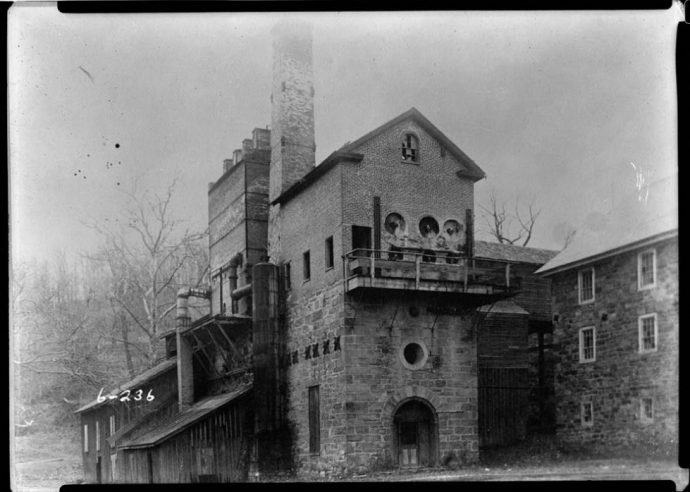
14 October 1936
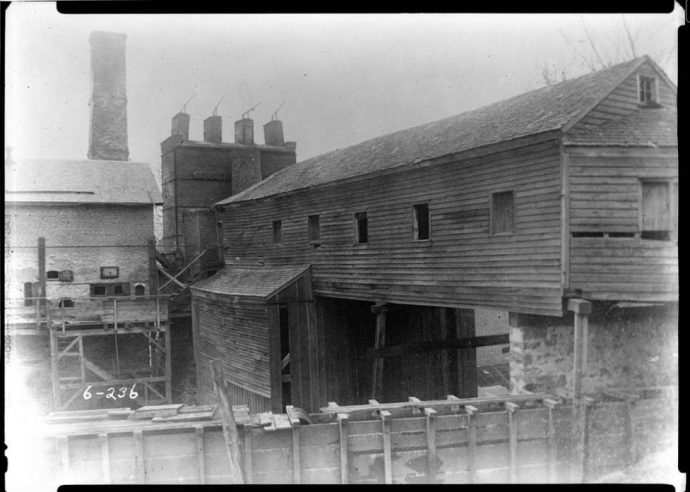
14 October 1936
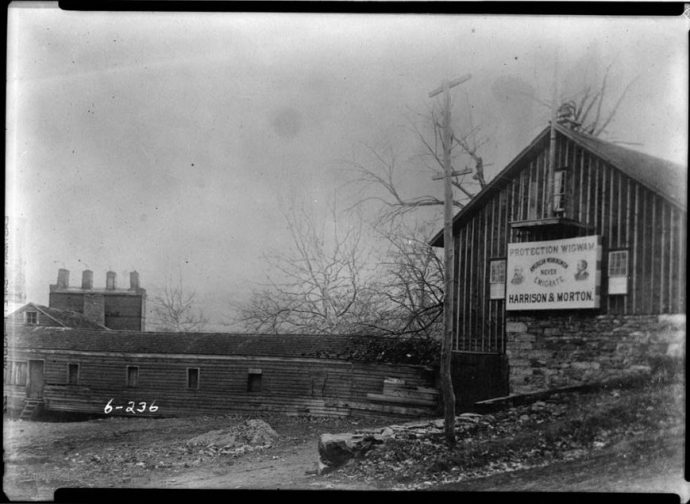
14 October 1936
Images from the Historic American Buildings Survey (1930s) at: https://www.loc.gov/resource/hhh.nj0869.photos
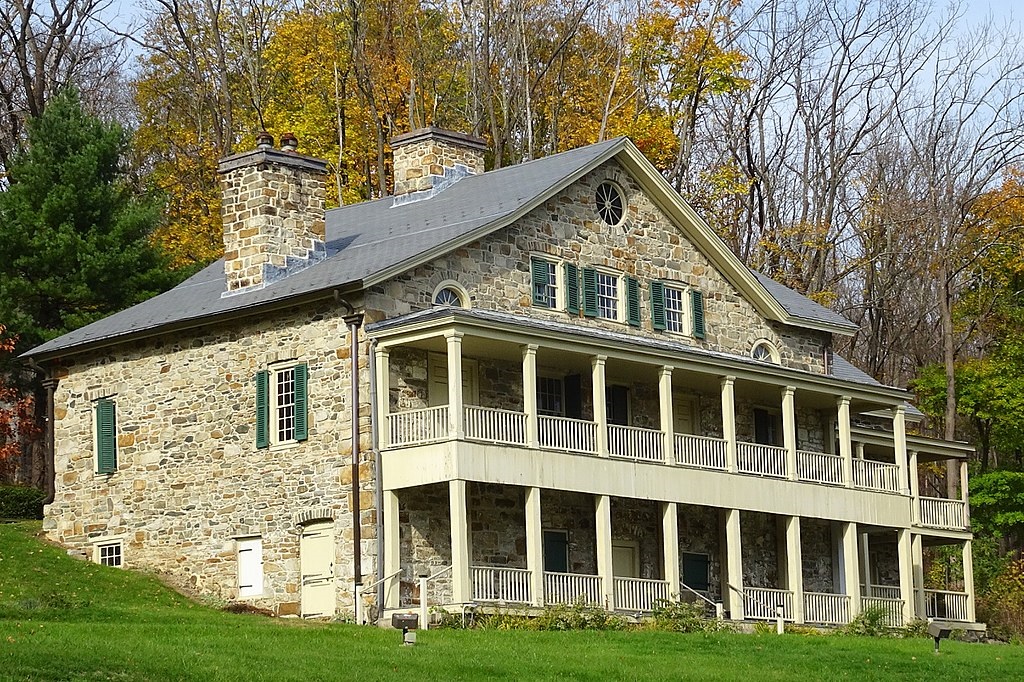
Shippen Manor
Archaeological excavations at Shippen Manor have produced a wide range of information about the past inhabitants of the site, and about the various changes that the manor house and grounds have undergone in previous years. Numerous subsurface features (including wells, builder’s trenches, refuse pits, middens, and various architectural elements) and thousands of 18th-19th century artifacts have been recovered. Information about the Manor was also obtained through primary sources such as inventories, letters, wills, and diaries. The site of the house emphasizes the position of the Shippens in the local society. They were “masters of all they surveyed” and then some. The estate contained over four thousand acres including land on the Delaware River and a grant from the King of England to operate a ferry. This iron plantation was basically self-sufficient, surrounded by tenant farms, various mills, a store as well as the iron furnace. The Manor is Georgian in style, constructed from local stone, two foot thick stone walls, and three immense chimneys. The ground floor consisted of six rooms. Upstairs there were two bed chambers and four garret rooms (now offices and museum storage). When the Manor was built, it was designed to be functional rather than luxurious. Three colors dominated the interior of that portion of the house restored to the colonial period: white, blue-gray and red. Through analysis of paint chips, taken from throughout the Manor, we have been able to reproduce the colors used in the restoration of the Manor. The baseboards in this portion of the house were painted black, this prevented dirt from showing on the lower section of the white walls. Where you see breaks in the black baseboards, this indicates a contemporary addition. The pine floors in the Reception room, Dining room, and Victorian parlor are original. The floors in the Robeson study and Shippen kitchen needed to be repaired or replaced.